
SuperAIRE provides funding opportunities to support research and collaboration in AI for Renewable Energy (AI + RE). Our funding programmes are designed to foster interdisciplinary projects, advance technological development, and support networking and collaboration opportunities.
For updates on funding opportunities and application deadlines, visit our webpage or subscribe to our newsletter.
This research aims to develop and evaluate the integration of LLMs with other advanced AI
techniques, such as deep learning architectures, to support and automate O&M processes in
renewable energy systems. The ambition is to harness the natural language understanding,
reasoning, and generative capabilities of LLMs to enhance fault detection and diagnosis, remaining
useful life (RUL) estimation, and predictive maintenance across the renewable energy sector. The
proposed work is particularly important, as O&M activities in renewable energy systems typically
account for a significant portion of total lifecycle costs—often ranging from 20% to 30% of the overall
expenditure. Improving the efficiency and intelligence of these processes can therefore lead to
substantial cost reductions, increased system availability, and extended asset lifetimes, ultimately
contributing to greater sustainability and energy security.
The proposed work is novel in its integration of diverse data sources—ranging from textual
information to numerical sensor measurements—using data fusion algorithms within LLM-based
frameworks, creating a unified, multimodal understanding of system behavior and performance. This
integration enables the solution to perform context-aware reasoning that goes beyond simple pattern
recognition, allowing it to interpret complex operational scenarios, infer causal relationships, and
generate actionable insights. Such an approach represents a significant advancement over
conventional AI models, which typically operate on isolated or homogeneous data streams and lack
the ability to combine linguistic and numerical information for holistic O&M decision-making.
This project applies AI to design and optimise renewable energy pathways from CO₂, with a focus on integration into UK steelmaking. In doing so, it addresses urgent challenges in RE deployment, smart integration, and industrial decarbonisation— core to SuperAIRE’s mission. The outcomes will generate value across academia, industry, policy,
and society. This project will be the first to build database for ICCU, and integrate AI, CO₂ utilisation, and renewable energy for steel decarbonisation. It will strengthen UK leadership at the AI–RE for hard-to-abate sectors, supporting the Net Zero Strategy.
AI-SysBehavSOLAR proposes to address two limitations by employing AI methods to analyse the interaction and interdependency of rooftop and commercial solar across sectors and scales for the first time. GNNs are particularly suited for this task as they can natively model the complex spatial and network dependencies that characterize technology diffusion. Furthermore, by empirically testing insights from established economic theory against data-driven approaches, this study will enhance the trustworthiness and validity of the AI framework. A model that can recapitulate known socio-economic phenomena is inherently more reliable and credible for policymakers. We will answer the following research questions: To what degree commercial and rooftop solar PV share common deployment patterns and mutually influence and interact with each other? Are there regular time-lags explaining their adoption? Are there certain geographical patterns that are the core of their deployment?
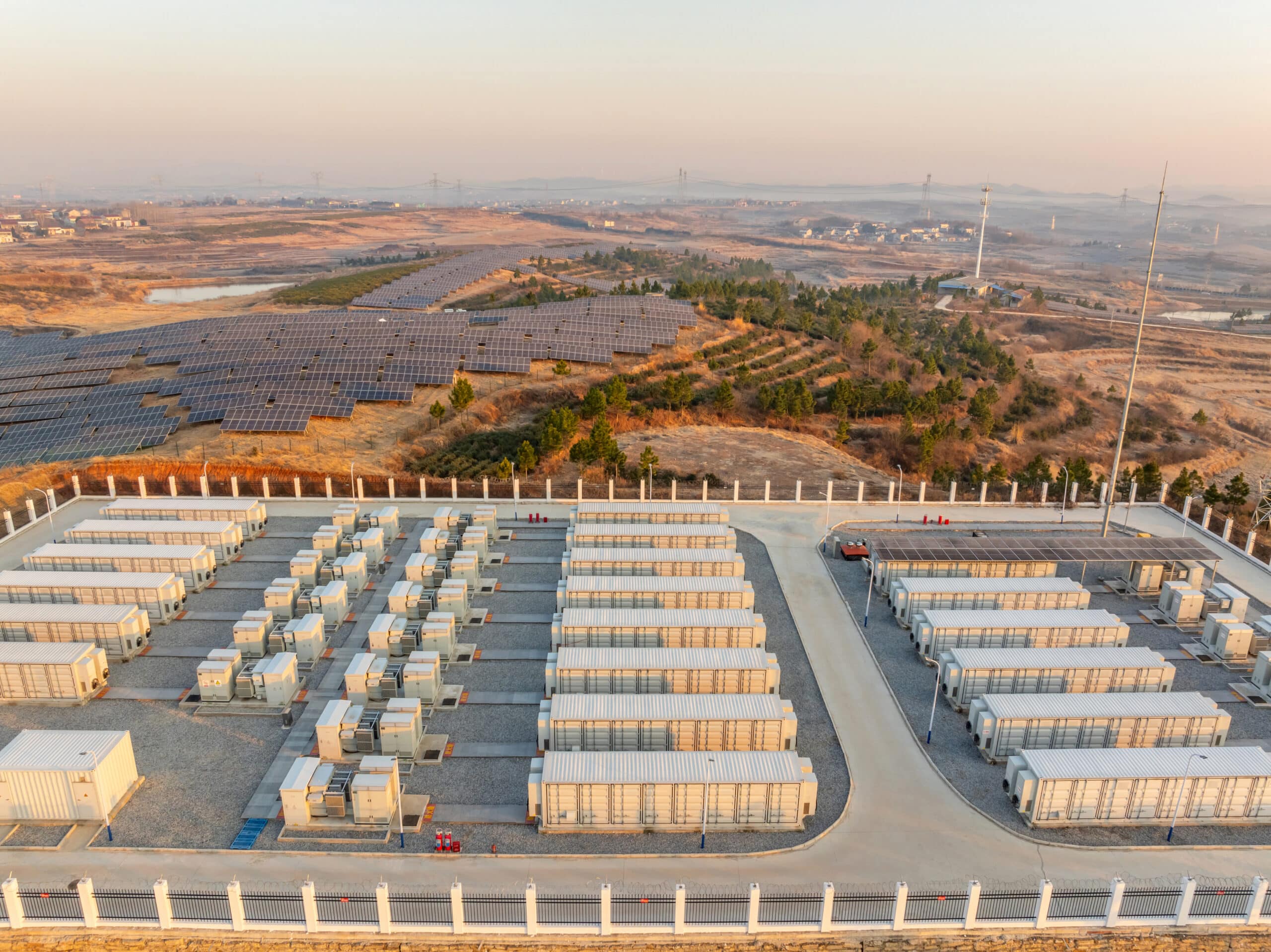
This project will investigate how Artificial Intelligence can optimise the deployment and operation
of battery energy storage systems (BESS) in renewable-rich regions such as Kerala, India. Using
open datasets on solar generation, grid demand, and environmental conditions, the research will
develop and test AI-based models for predicting optimal storage capacity, charge–discharge
scheduling, and lifecycle performance. The study will be conducted in collaboration with Amrita
University and the Kerala Energy Management Centre, combining UK expertise in digital energy
innovation with India’s renewable energy challenges. A validation workshop in Kerala will enable
data sharing, model refinement, and joint interpretation of results. Outcomes will include an open access analytical framework, a joint technical paper, and a policy brief for regional energy planning.
The project aligns with SuperAIRE’s vision by applying AI methodologies to accelerate the global
energy transition through data-driven, equitable innovation
Offshore wind is expanding rapidly and will play a central role in the global clean energy transition.
Grid-forming (GFM) energy sources, including GFM offshore wind, enables independent voltage
and frequency regulation via power electronics to maintain system stability and is increasingly
recognised as essential for weak grids with large-scale renewable integration. While this technology
is crucial in supporting power system with high levels of renewable penetrations, it also introduces
new engineering challenges, particularly in the protection in offshore wind power integration
systems. This project will explore how artificial intelligence can be harnessed to address these
challenges, working closely with industrial partners to ensure real-world relevance. By developing
innovative AI-based solutions for offshore wind networks, this project aims to enhance reliability
and cost-effectiveness of offshore wind power integration, providing both technological innovation
and societal value in accelerating the global efforts toward carbon neutrality.
This project represents an initial phase of a larger research initiative aimed at developing a set of
vision foundation models for autonomous wind turbine maintenance. Current vision models
struggle with fine-grained fault detection under diverse conditions and are limited to a
constrained set of faults. Our goal is to develop a robust and scalable vision foundation model for
autonomous wind turbine inspection. The proposed approach consists of: (1) adapting foundation
models through hybrid self-supervised learning on ultra-high-resolution real-world and synthetic
data to achieve robust cross-environment generalization; (2) distilling the model into a
lightweight student version optimized for edge autonomous navigation; (3) integrating a
multimodal LLM to generate automated inspection reports; and (4) creating a digital twin of the
turbine using 3D Gaussian modeling for spatially grounded visualization of inspection results.
The built environment is stepping up efforts to meet net-zero targets by increasing the adoption
of renewable energy at both local and regional scales. Multi-energy-vector management, known
as coordinated energy use of electricity, heating, cooling, gas and other vectors, offers significant
potential to expand renewable integration through enhanced demand-side flexibility. Artificial
intelligence (AI) can address the growing complexity and data intensity of such systems by
simulating dynamic demand profiles, mapping renewable energy availability, and optimising
cross-vector coordination.
This project brings together researchers from the UK, Cyprus, and Italy, combining
complementary expertise in building energy systems modelling, renewable technologies, AI
integration, and multi-energy management. Through joint research, visits and meetings, and a
dedicated workshop, the project will strengthen existing collaboration and advance net-zero
building energy systems through innovative, integrated, and intelligent approaches to
coordinating multiple energy vectors and facilitating renewable integration.
High-fidelity stochastic optimisation is crucial for planning renewable-integrated multi-energy hubs
(incorporating hydrogen and carbon management) but is computationally too intensive for real time operations. This project bridges this gap by developing an AI-driven surrogate framework. We
will leverage an existing complex model to generate a massive dataset across thousands of
stochastic scenarios, varying renewable profiles, market prices, and demands. From this, we will
train lightweight AI surrogates (such as neural networks) to instantly predict optimal dispatch,
costs, and emissions. The resulting model functions as an ‘AI-driven digital twin,’ replicating high fidelity decisions with a dramatic reduction in computational time. This transforms a slow planning
instrument into a high-speed control asset, enabling the real-time decision-making needed to
maximise renewable energy utilisation and ensure grid reliability.
The IDTM project aims to develop an adaptive edge intelligence control framework integrated with
a cloud-based digital twin to enhance the resilience, efficiency, and reliability of renewable–battery
hybrid systems operating within marine microgrids. As the deployment of floating and off/on-shore
renewable assets grows, there is a critical need for smart and autonomous control systems that
can respond effectively to environmental variability and the limitations of remote, off-grid
operation. This project will deliver a real-time, AI-enabled control system that operates on edge
devices co-located with renewable energy and battery storage units. It will optimise power flow
dynamically, ensuring effective battery management. The control logic will be synchronised with a
digital twin platform for monitoring, fault prediction, and operational planning. The project
outcomes will be shared through open-access tools and publications and will contribute to the
broader understanding and adoption of intelligent, resilient energy systems within future low carbon energy networks.
The proposed project builds on the applicant’s established digital twin model to assess how
stakeholder-tailored digital solutions can improve the resilience of local energy systems, with the
integration of renewable energy resources and storage systems. By focusing on the recent
Heathrow Airport and Iberian Peninsula blackouts, the research will analyse operational data and
stakeholder experiences to identify key factors affecting system response and recovery. The digital
twin will be adapted to simulate these events, through integrating technical, operational, and user
engagement perspectives. A stakeholder workshop will be held to review model outputs, validate
findings, and co-design digital interventions for improved resilience. The outcomes will be shared
through a web-based visualisation platform, supporting transparent communication and
collaborative scenario analysis. This work aims to generate new evidence on the value of digital
tools and inclusive governance for energy resilience, and to provide practical resources for local
authorities, operators, and community stakeholders